Residents and businesses hope for a return to normal as road reopens

Sarah Teare, who runs a dog-grooming business, says the year-long closure of Durham Street was a nightmare for business
- Published
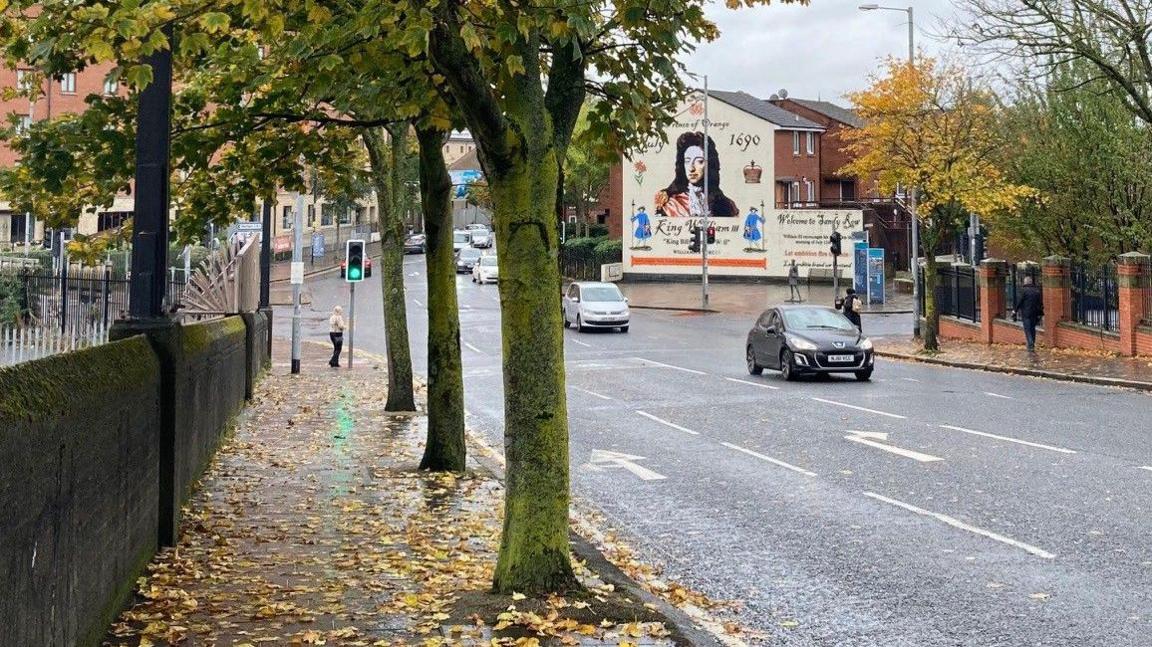
A key link road in Belfast city centre has been reopened more than a year after it was closed during work around the new Grand Central bus and train station.
Durham Street, which links Sandy Row with Grosvenor road, was closed in October 2024 to accommodate the demolition of the Boyne Bridge.
It reopened at 08:00 GMT allowing traffic to flow along the route once more.
Residents and business owners have told BBC News NI that the past year has been a "nightmare" and the area was a "ghost town".

The road was reopened around 08:00 GMT on Saturday
Grand Central station opened to passengers in September 2024.
It is the largest public transport station on the island of Ireland and is estimated to have cost £340m.
Chris Conway, Translink's chief executive said accessibility to Durham Street will provide safe and convenient access to the station.
"The road design has been carefully considered to prioritise safety and cater for large pedestrian flows."

Traffic returns to Durham Street
Sarah Teare, who runs a dog-grooming business on nearby Sandy Row, says the year-long closure was a nightmare for business.
"It was awful. Honestly, we thought we were going to have to close at one stage," she said.
"It was taking some clients two hours to get here."

Kim Harris said her business takings went down by 40%
Kim Harris, who owns Harris Kilt Company, said takings went down by 40%.
"We used savings to keep ourselves open," she said.
"The council were very good. They helped with a revitalisation scheme, which helped greatly."

Neill Edgar some customers struggled to travel to his business
Neill Edgar, owner of Supreme Fish & Chips, said some customers from other parts of Belfast struggled to travel to his shop because of the road closure and consequent traffic congestion.
"It was bad especially at the start. A lot of customers who would come down from the Donegall Road, Donegall Pass, Grosvenor Road area, were finding it hard to get to us.
"Hopefully once the road re-opens, it'll get back to normal," he said.

Margaret Totton, 88, lives beside Sandy Row
Margaret Totton, 88, who lives beside Sandy Row, hopes the newly-opened road eases traffic congestion and brings new shops.
"There's not much there for us at the moment, and for the elderly, we can't get anywhere else," she said.

Durham Street has been closed since October 2024
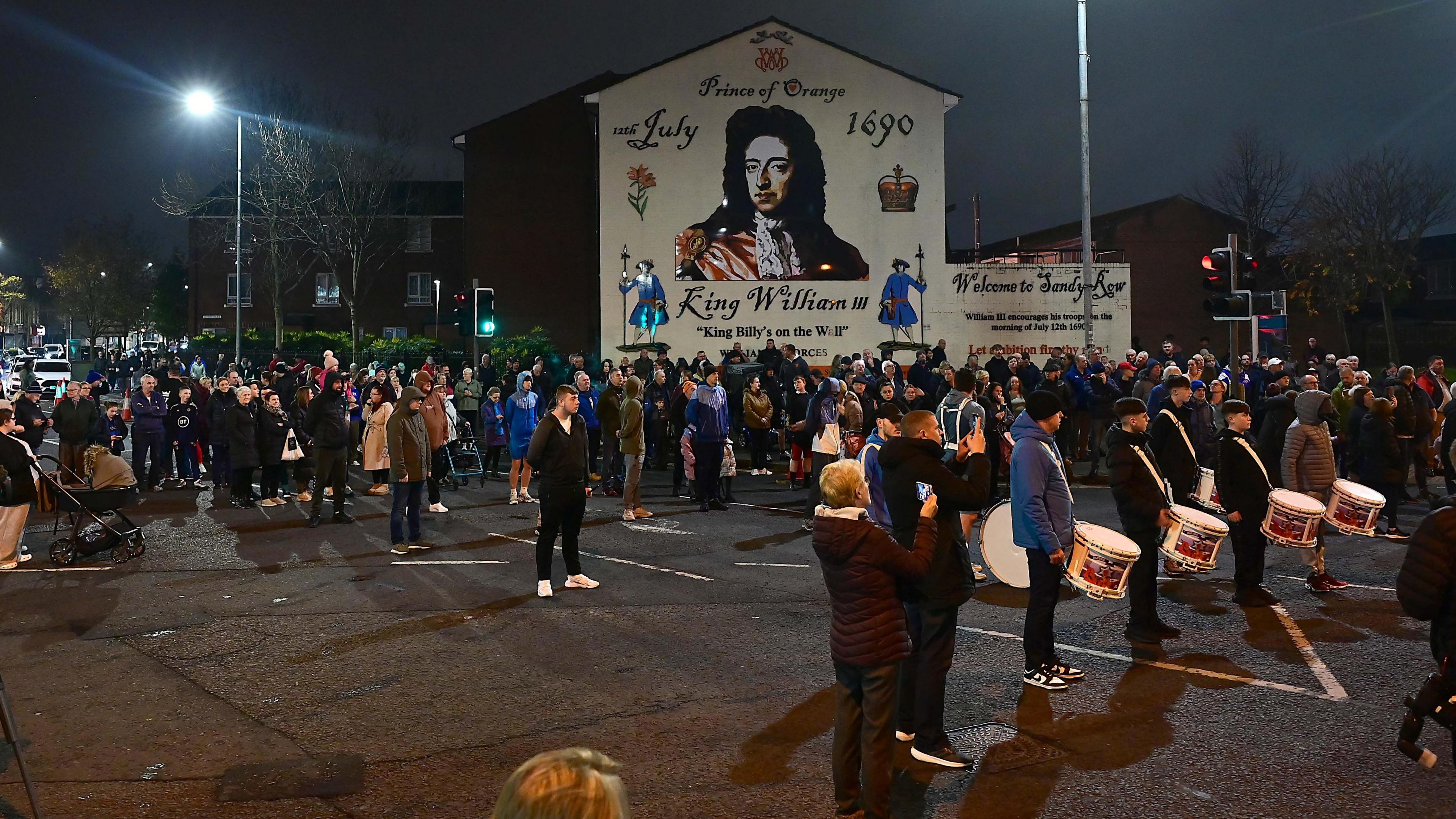
During construction, protests were held in an attempt to prohibit the demolition of the Boyne Bridge, as well as calls for compensation for businesses.
William III is believed to have crossed on his way to the Battle of the Boyne in 1690.
The bridge which Durham Street runs over had been rebuilt in 1936, but the original structure dated back nearly 400 years.
There was also widespread congestion last year after the opening of the station and the closure of Durham Street.
What is Boyne Bridge Place?
The area of the road where the bridge once stood is known as Boyne Bridge Place.
The name was proposed by the Blackstaff Residents Association and Belfast City Council officially confirmed the name in December 2024.
Billy Dickson from the Blackstaff Residents Association said had their name not been successful, "the name Boyne would have disappeared from this site forever" and described the renaming as a "success in itself".

Campaigner Billy Dickson said there was still "hurt" and "anger" in the area, but the name of Boyne Bridge Place was a "success in itself"
"We would like to focus on what we have achieved and not what we have lost", Mr Dickson said.
"Although for people of my generation, the demolition of the 1936 Boyne Bridge was a very hurtful experience, especially in our view its removal was unnecessary and the serious impact it has had on the people of Sandy Row and the traders for over a year."
Mr Dickson described the area as a "ghost town" since the closure of Durham Street and said it has been "so depressing".
"But with the reopening of the road it is a chance to restore lost trade."
"The hurt is still there, the anger is still there as that bridge belonged to the people, but we look to the positives," he added.
Related topics
- Published6 days ago
- Published8 October 2024
- Published5 November
- Published5 November 2024