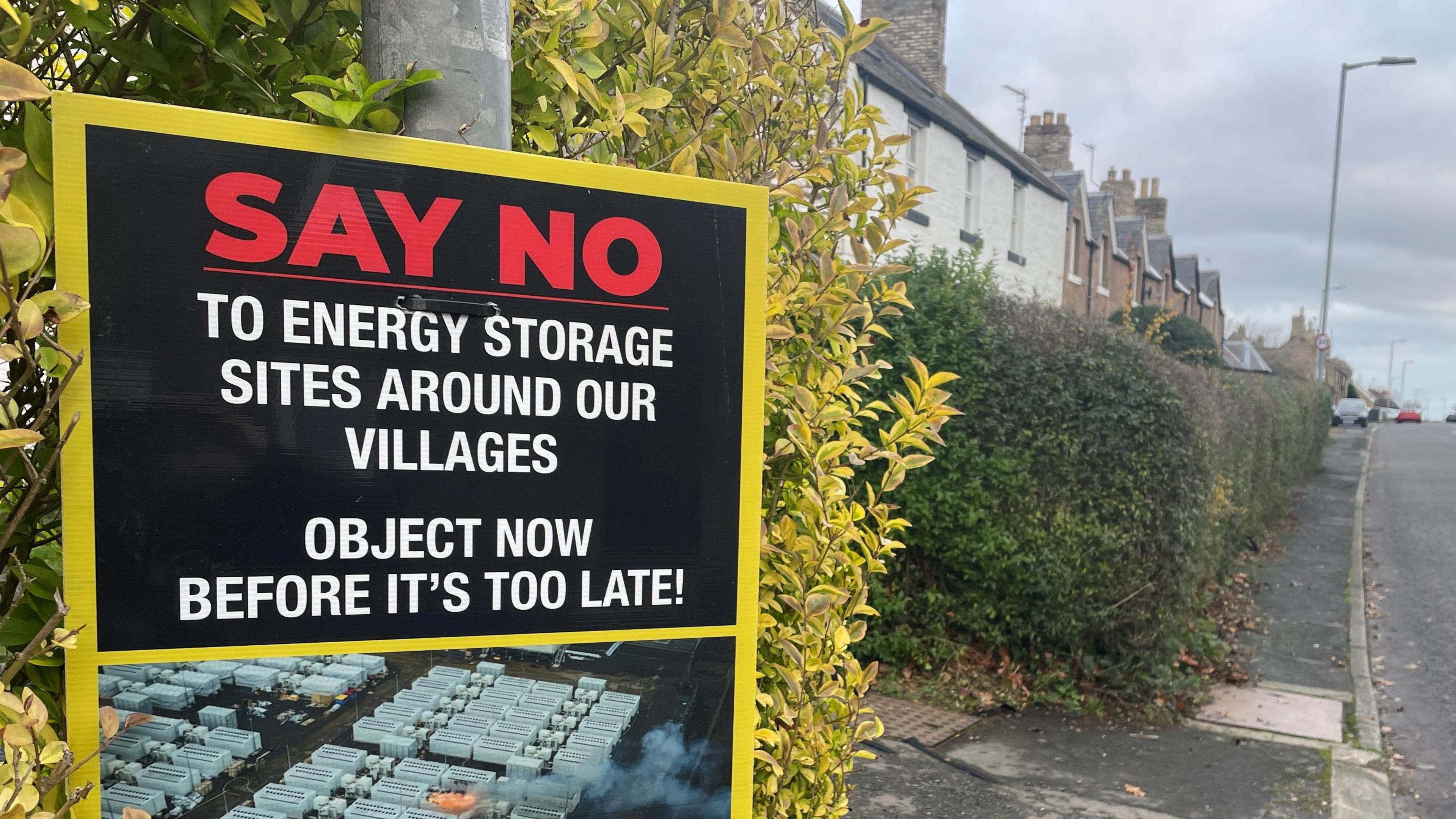
No objection advised to sixth energy storage scheme near village

Nearly 100 containers would be sited on the land as part of the latest plans
- Published
Councillors are being advised not to object to plans for a sixth battery energy storage system (BESS) development near a Borders village.
Since 2022, four schemes have been approved near Leitholm while Scottish Borders Council (SBC) has opposed a fifth - triggering a public inquiry into the plans.
Residents of the village - between Coldstream and Greenlaw - warned last year that the heart of their community was being "ripped out" by such schemes.
A report to SBC's planning committee has recommended it does not object to the latest application by Bishops Dal Energy with the final decision lying with the Scottish government's Energy Consents Unit.
The area has become a hotbed for applications due to its proximity to the Eccles substation which is being expanded.
The latest project would see 96 container-sized storage systems, a substation and fencing and new entrances put up.
It has attracted significant opposition due to safety concerns, visual impact and the loss of farmland.
However, SBC is being advised not to lodge an objection.
A report to councillors said a "significant increase" in BESS developments was required nationally to help meet net zero greenhouse gas targets.
The systems provide storage for energy from renewable sources to meet grid demands and allow network flexibility.

Villagers have raised concerns about the number of developments nearby
The report said the principle of developing land in the area for such projects had "previously been accepted" and no policy existed to limit the number which could be developed.
"It is recognised that the existing BESS approvals at Eccles already provide the ability to store a significant amount of energy at this location," it said.
"This latest development may pose further cumulative challenges (in terms of connectivity and capacity), but importantly, current national and local planning policy and guidance does not set any limits on energy storage requirements.
"Therefore, each proposal must still be considered on its own individual merits."
It concluded the project would have some "minor landscape and visual impacts" and that any other material planning implications could be addressed by "appropriately worded" conditions.
- Published12 December 2024