Kidnap and murder of girl explored 50 years on

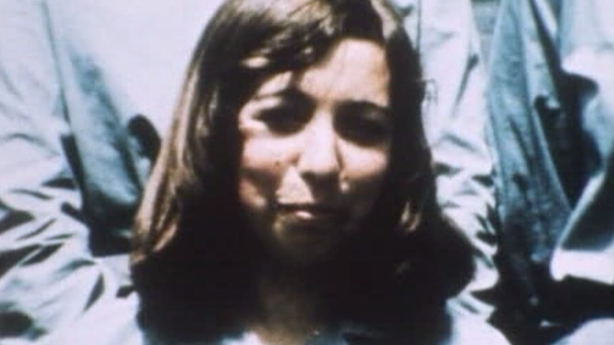
Lesley Whittle was kidnapped and murdered by a serial killer known as the Black Panther in 1975
- Published
In 1975, 17-year-old Lesley Whittle was kidnapped from her rural home by a notorious career criminal who became known as the Black Panther.
She was discovered missing by her mother, who found an empty bed when she went to wake her up. All that was left behind were three ransom notes.
The case gripped the country and despite a huge police operation, including several attempted ransom drops, Lesley's body was found about two months later.
Now, on the 50th anniversary of her killer's arrest, those closest to the case have shared their stories as part of BBC Sounds series The Cop, The Kidnap and The Killer.

Donald Neilson, known as the Black Panther, was handed four life sentences
The series follows the journey of Det Ch Supt Robert Booth, of West Mercia Police, who led the investigation into the kidnapping.
It features interviews with people including the lawyer who represented the Black Panther at his much-publicised murder trial, a police officer who worked at the murder scene and journalists who reported on the story at the time.
The Black Panther was Donald Neilson, a former builder and army serviceman from Bradford.
He was given the moniker by the media due to his habit of wearing black clothes and a balaclava during hundreds of burglaries and robberies he committed.
He kidnapped Lesley two months after a nationwide crime spree during which he killed three sub-postmasters in Harrogate in North Yorkshire, Accrington in Lancashire and Langley in the West Midlands.
The teenager, who was a student at Wulfrun College in Wolverhampton, was taken from the Whittle family's home in Highley, Shropshire, in January 1975.
The family, owners of Whittles coach firm in Kidderminster, were left ransom notes containing a demand for £50,000 and a warning not to involve the police.
Neilson had read some years previously about the family's wealth and their daughter's inheritance.

Lesley Whittle was kidnapped and murdered by Donald Neilson in 1975
The story quickly spread and journalists descended on the village, including BBC Midlands Today's Nick Owen, who at the time was a reporter for BBC Radio Birmingham.
He said hearing archive audio of news flashes from the time "sent a chill" through him and he recalled how "stunned" people were at the story.
Owen said he was sent out to Highley, where he identified the Whittles' house and knocked on the door, which was answered by Lesley's brother Ronald.
"I asked if I could talk to him, if I could interview him, if he could tell me the story," Owen said. "He was very polite. He looked stunned by the turn of events.
"He didn't want to speak to the media at all, understandably. They were coping with the trauma, the shock, of the whole thing."

Lesley Whittle's body was found down a drainage shaft in Bathpool Country Park, Kidsgrove
In March, after several failed attempts to deliver the ransom, Lesley's body was found in a drainage shaft at Bathpool Country Park in Kidsgrove, Staffordshire, where Neilson had been holding her hostage.
He was arrested many months later in December when he was seen acting suspiciously outside a post office near Mansfield, Nottinghamshire.
Barrington Black had been a solicitor in Leeds for about 18 years at the time and had developed a reputation for being able to deal with criminal cases, including murders.
It was just a normal day of visiting court and speaking to clients, he said, when he got the news that Neilson wanted him to be his defence solicitor.
'He came to me for help'
Asked what it was like to represent him, Mr Black said: "The frequent question a lawyer is asked – the cocktail party question – is how can you defend somebody who you know is guilty?
"The answer is simple – I didn't know he was guilty. He came to me for help, he came to me for advice."
He said it was not his job to decide whether or not he was guilty – that was the job of a judge, magistrate or jury.
"My duty is to put over his side of things to the best of my abilities," he added, "to represent him and to find out if there are any chinks in the armour of the prosecution case."
Neilson admitted kidnapping Lesley and extorting her family but denied murder, claiming her death had been an accident. He was found guilty by a jury at Oxford Crown Court in July 1976.
Later that month, he was also convicted for the murder of the three sub-postmasters – Donald Skepper, Derek Astin and Sidney Grayland.
He was handed a total prison term of four life sentences.
Following a failed appeal against his sentence, Neilson became ill with pneumonia in prison and died in December 2011, aged 75.
As well as interviews with some of those who were involved, the podcast contains rare and original archive material not broadcast since the incident happened half a century ago.
All five episodes of The Cop, the Kidnap and the Killer, created by BBC Radio Stoke, are available to listen to on BBC Sounds as part of its Crime Next Door series.
Get in touch
Tell us which stories we should cover in Staffordshire
Follow BBC Stoke & Staffordshire on BBC Sounds, Facebook, external, X, external and Instagram, external.
- Published7 March
- Published14 January