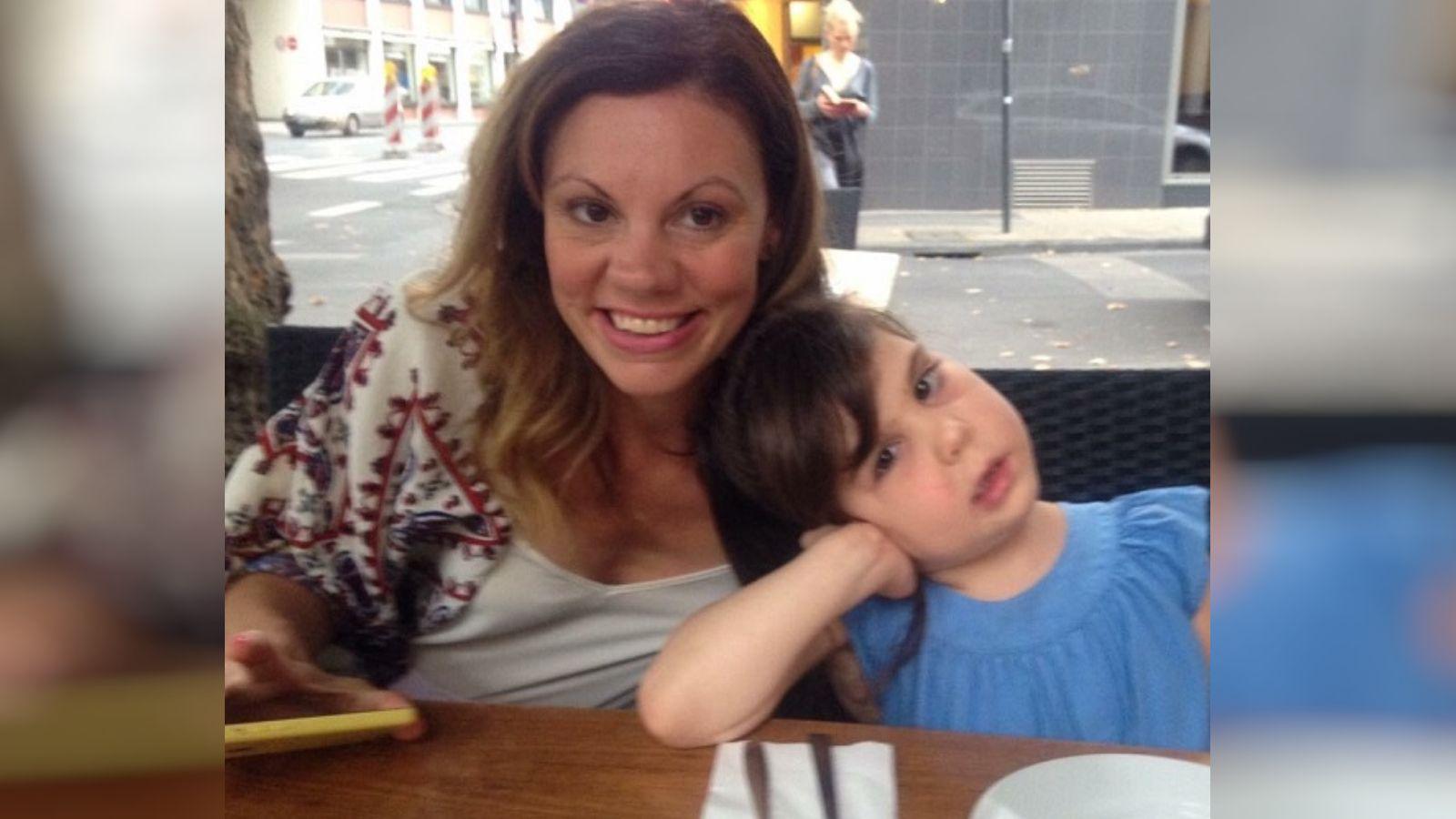
Mother wants change so child 'didn't die for nothing'

Sam Tucker's eldest daughter Molly was diagnosed with a brain tumour when she was two years old
- Published
A mother has called for earlier diagnosis of paediatric brain tumours after the death of her six-year-old daughter.
Sam Tucker, originally from Bristol, believes "opportunities were missed" when her daughter Molly was diagnosed with a large mass. She later died in 2017 when the family were living in Dorset.
Ms Tucker who, along with other bereaved mothers, delivered a study to health ministers showing how brain tumour treatment was not consistent across the country, said she wanted to make sure her daughter's death was not "for nothing".
Dorset Healthcare University Foundation said "we do fully investigate all complaints" but would not comment on individual cases.
Ms Tucker said she had "always wanted to be a mum" and was "so excited" to have her first daughter Molly in 2010.
She said at her eight-month check with a health visitor, Molly's head circumference was measured as part of routine checks which showed it had risen but because no other symptoms were found there was "no concern".
Looking back, Ms Tucker said she now feels this was a "missed opportunity" and should have been a "red flag and referred".

Molly's mum Sam said she was "failing to thrive" in her early days
Over the next two years, Ms Tucker said she felt "exasperated" because it was becoming "more obvious that something was wrong, but nobody knew what it was".
One morning, she went to get Molly out of bed and she was "limp" so she was immediately admitted onto the paediatric ward at Dorset County Hospital.
While there, Molly had a seizure and was taken for a CT scan, where they found a "mass on her brain that was so big they didn't think they could remove it" her mum said.
Molly was then taken to Southampton Hospital for emergency surgery and her parents were warned that she may not survive the journey.
"I was never more scared in my life," said Ms Tucker.

Molly's mum, Sam Tucker said she was "never more scared in my life" during her daughter's emergency treatment
Molly had a 10-hour "debulking" operation to remove most of the tumour, a procedure that is normally done when the entire tumour is too large to remove or is in a place that makes complete removal unsafe.
When the operation was over, the family said 5% of Molly's tumour was left.
Ms Tucker, who was pregnant with her second daughter Rebecca at the time, said she doesn't how Molly survived as long as she did "with that growing inside her".
Molly spent the next two weeks in intensive care before starting chemotherapy and radiotherapy, and was eventually able to go home and "stabilised" for 18 months.
But in 2017 she relapsed, with Ms Tucker saying at this stage the tumour "eventually took over".

Molly was described as a "force to be reckoned with" and anyone that met her was referred to as being "Molly-ed"

Molly died at home in her bedroom on 28 September surrounded by her parents and two younger sisters, Rebecca and Bella
Earlier this week, Ms Tucker joined the Angel Mums - who have all lost children to brain tumours - in London to present a study to health ministers.
Put together by the Tessa Jowell Brain Cancer Mission, which is a brain cancer charity set up in memory of the former culture secretary and MP who died in 2015, the study includes 13 recommendations to change the way brain tumour patients are treated.
Dr Nicky Huskens, CEO of the brain cancer mission, said the report showed "core treatment" such as surgery, chemotherapy and radiotherapy was "consistent no matter where you live".
But it can make a difference to the "access you have to trials".
Dr Huskens said the study also found "specialised care", to help patients return to school and provide mental health support, also differs based on location.

The Angel Mums gathered in Parliament Square, London, before walking to Great Ormond Street Hospital
The group set off from Westminster and walked to Great Ormond Street Hospital, wearing angel wings, where they handed the paper over before singing carols.
Ms Tucker said she hopes the study will bring about change so Molly "didn't die for nothing".
"The children who died don't have a voice anymore, and if they did, they would be saying 'go for it, make sure change happens'," she added.
Minister for Public Health and Prevention Ashley Dalton said every child deserves "equal access" to treatment for brain cancer "regardless of where they live".
He said the Department of Health and Social Care was "committed to giving all cancer patients access to clinical trials" and keep making "progress on cutting cancer waiting times".
Get in touch
Tell us which stories we should cover in Bristol
Follow BBC Bristol on Facebook, external, X, external and Instagram, external. Send your story ideas to us on email or via WhatsApp on 0800 313 4630.
Related topics
- Published30 September
- Published14 November