Last rods of uranium removed from power station
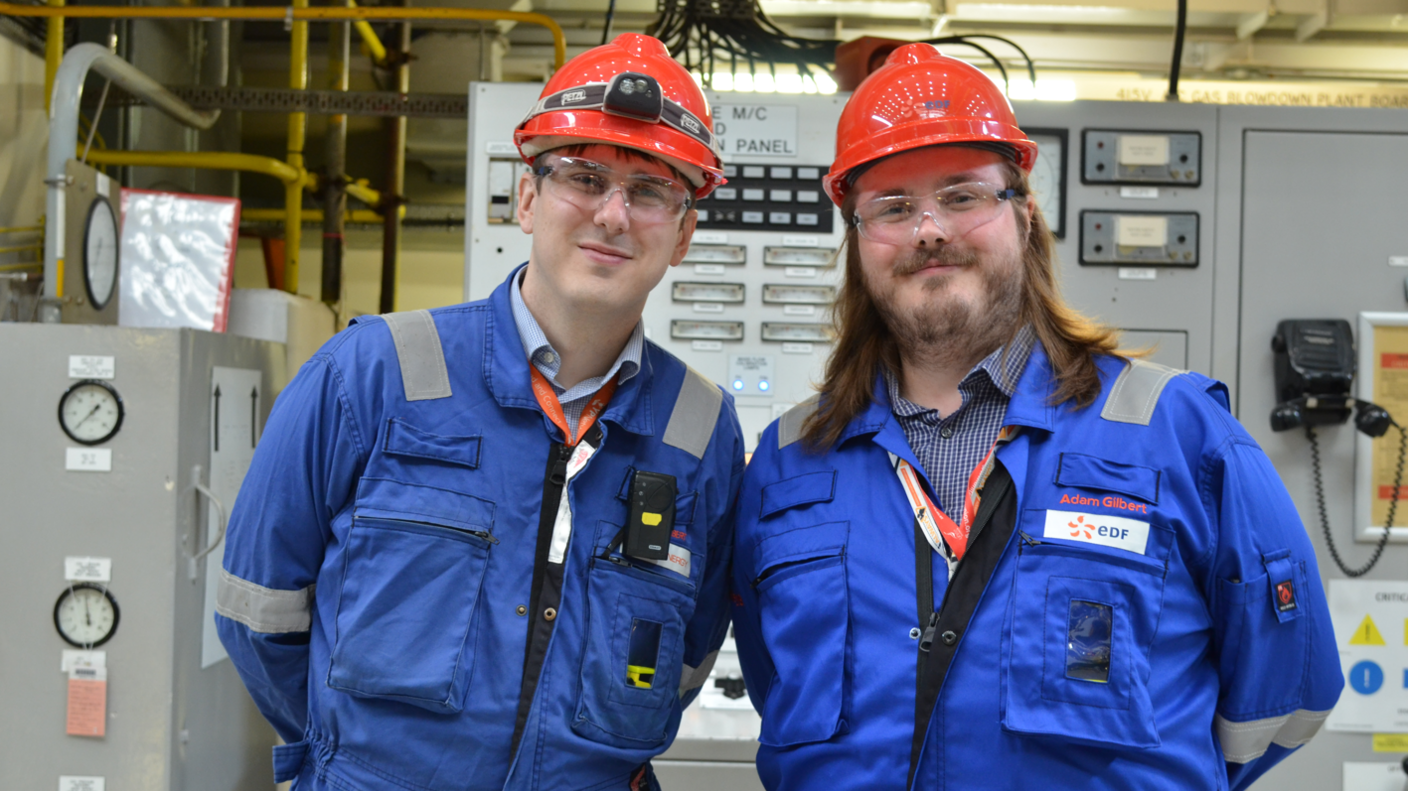
Inside the control room at Hinkley Point B
- Published
A nuclear power station which generated electricity for 46 years has had its final rods of uranium removed.
Hinkley Point B became operational in 1976 and was once the most productive nuclear site in the UK. Its reactors were turned off three years ago when EDF - the firm which owns the plant - said the site had reached the end of its life.
Its used uranium rods have now been taken to Sellafield in Cumbria for reuse or storage, marking the end of the defueling stage - one step in what will be a 95-year-long decommissioning process.
Nicola Fauvel, station director at Hinkley Point B, said both reactors being empty was "a really poignant and quite an emotional point in the station's life".
The power station, which lies on the Somerset coast, has been one of the largest employers in the area for decades.
Husband and wife Sheila and Martin Stevens both worked at the site, and their two sons - who could see the station from the Watchet house they grew up in - later got jobs there too.

The Stevens family have all worked at Hinkley Point B
"We can't believe it's coming to an end after all these years," said Mrs Stevens, who worked as a power station guide.
"Running for the length of time it has is testament to British engineering and everyone should remember that and we should all be proud," her husband added.
The final part of the de-fuelling process at Hinkley Point B was finished on Monday.
The nuclear site will later be transferred to the government's Nuclear Decommissioning Authority to begin the dismantlement stage of the process.
Related topics
- Published27 October 2023
- Published8 April