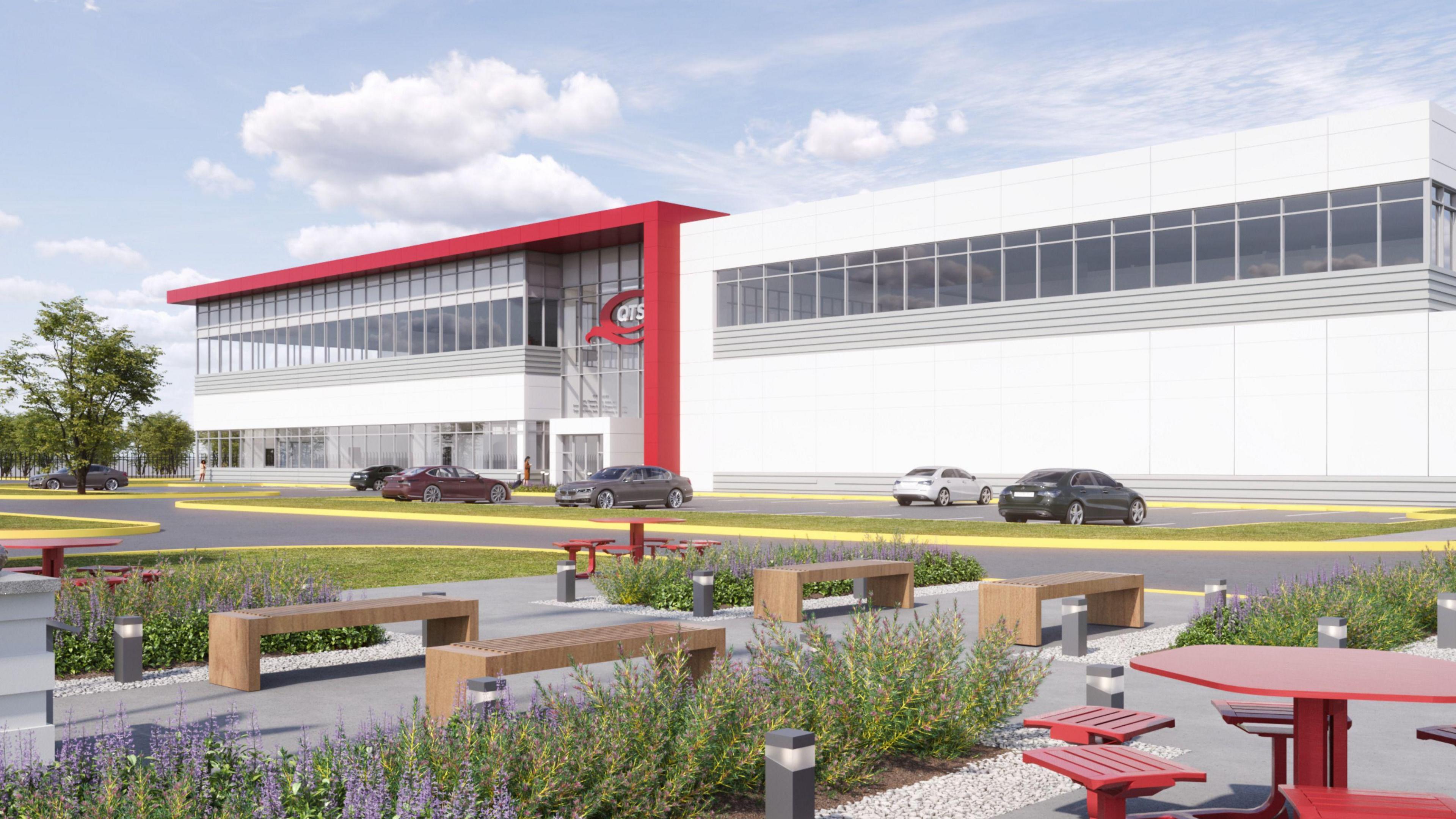
First phase of data centre works given go-ahead

The data centre will be built on the former Blyth Power Station site
- Published
The first phase of development works for a £10bn artificial intelligence (AI) and cloud computing data centre have been given the go-ahead.
Northumberland County Council approved the first of five phases of construction works on the former Blyth Power Station site at Cambois, near Blyth.
US firm QTS plans to build 10 data halls over more than 133 acres (540,000 sq m) on the site, which it says will create thousands of jobs through its construction and operation.
Members of the council's strategic planning committee voted unanimously to approve the construction of two of the halls as part of the first phase of works.
Outline permission for the facility was granted in March, with previous planning documents estimating a timeline of 2035 for the final phase to be completed.
Andy Lawson, QTS director of pre-development, told the committee the company wanted to "move the project along at pace" and was "just getting started".

The site had previously been home to Britishvolt, which had intended to build a £3.8bn battery factory for the electric car industry
Initial earthworks began on the vacant plot in October.
Councillors were told the scheme would be staffed by about 400 people once fully operational and could indirectly create up to 2,700 jobs in related tech industries.
Each data hall will stand at around 110ft (34m) and requires eight separate electricity lines, 55 diesel-powered generators to act as an emergency power supply during outages, and cooling systems to keep their huge network of computers at the right temperature.
The proposals signed off also include two "freedom parks", access roads, pedestrian and cycle paths, landscaping and a security guardhouse, according to the Local Democracy Reporting Service.
Malcolm Robinson, independent councillor for Bedlington West, said the old power station site had long been a "scar" on the coastline.
"This is a 21st Century business, this is not the old heavy industry that was there," he said.
"It is going to be a damn sight better - and I am just keeping my comment to the landscaping, the way it will look - than what has ever been there in the past."
The site had previously been home to Britishvolt, which had intended to build a £3.8bn battery factory for the electric car industry.
However, the company collapsed in 2023 leading to the loss of more than 200 jobs.
Follow BBC North East on X, external, Facebook, external, Nextdoor and Instagram, external.
Get in touch
Do you have a story suggestion for BBC Tyne?
- Published21 May
- Published5 March
- Published3 March