Summary

  1. 'Budget involved making necessary choices'published at 10:40 GMT 1 December

    Starmer says parents he has met tell him they are working "harder and harder", but their wages are struggling to meet costs.

    He says he is "proud" Labour has scrapped the two-child benefit cap and raised the minimum wage, "making life better for working families".

    "That is what a Labour government is for," he adds.

    The Budget involved making "necessary choices", Starmer says. He claims the alternative was to cut public services, ignore child poverty or to "roll the dice" with extra borrowing.

    Those choices have been "tested to destruction" and haven't worked, he says.
  2. Hospital workers cheered when we lifted two-child cap, says PMpublished at 10:38 GMT 1 December

    "The Tories raised child poverty by 900,000, that is their worst legacy bar none," Starmer says.

    He adds that he and the chancellor went to a hospital after the Budget to speak to staff.

    "We told them we were lifting the two-child limit and they cheered," he says.

    Starmer adds that this matter is a public services issue and a fairness issue, which can help to lift pressure on the NHS.

  3. Starmer: Budget was moment of personal pridepublished at 10:33 GMT 1 December

    Media caption,

    Starmer: Budget was a 'moment of personal pride for me'

    Keir Starmer begins his speech by describing how the purpose of government is unlocking potential.

    Starmer then calls the Budget a "moment of personal pride" - referencing the decision to scrap the two-child benefit cap - and emphasising that he doesn't want to see a country where children grow up in poverty.

    It is a fundamental British belief that each child should go as far as their talent will take them, he adds.

  4. Starmer delivers speech on welfare reform - watch livepublished at 10:29 GMT 1 December
    Breaking

    Prime Minister Keir Starmer is now giving his speech in central London.

    We're expecting him to focus on welfare reform, warning that the welfare state is "trapping people, not just in poverty, but out of work". He's also expected to back his chancellor after a row about the build-up to her Budget.

    Stay with us as we bring you the key lines.

  5. Badenoch: There is an alternative to Labour's Budgetpublished at 10:27 GMT 1 December

    Badenoch adds that the "bottom line" is that there was an alternative to the Budget delivered by Labour last week.

    She says Labour will "pretend" that their Budget was the only thing they could have possibility been done, but adds that ministers have "given up even trying to find growth".

    "They're not looking for it, all they're doing now is dividing up what's already there."

    She says that Starmer claims that he want to deregulate the UK, but the Tory leader says that he "doesn't have an agenda".

    "What I saw last week was a group of people that have presided over growing unemployment, they're very happy for all of you to lose your jobs so they can save their jobs," she adds.

  6. Badenoch says Reeves delivered a 'Budget for benefits'published at 10:25 GMT 1 December

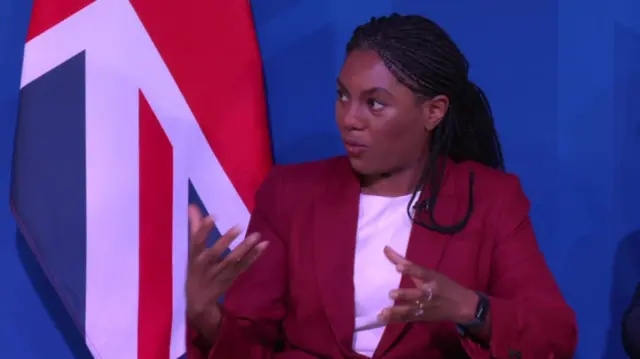
    Kemi BadenochImage source, UK Pool

    Before Keir Starmer speaks this morning, we're listening into Conservative leader Kemi Badenoch, who's addressing business leaders at an event in London.

    She accuses Labour of believing that "money grows on trees" and repeats her claim that Reeves's announcement last week was a "Budget for benefits".

    On allegations that Reeves misled the public about headroom, Badenoch says Reeves "appears to have given false information deliberately to try and get her Budget a soft-landing".

    She says if a CEO had done this they would be sacked, and says that's why the Conservatives have asked for an investigation.

    "We see issues around financial probity and market abuse," she adds, repeating her call for Reeves to resign

  7. What we are expecting to see this morningpublished at 10:13 GMT 1 December

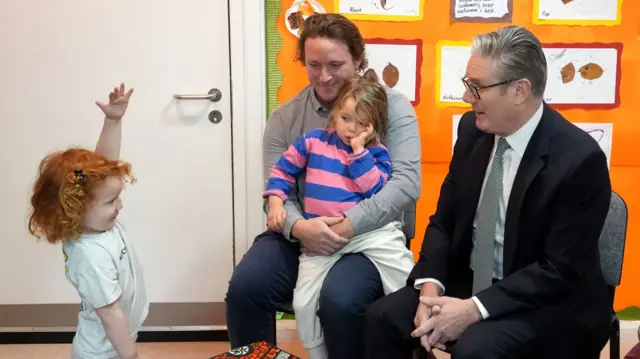
    A child with red hair holds her hand above her head, as a father sits with his child on his lap and Starmer sits to the rightImage source, PA Media
    Image caption,

    Starmer has been visiting a nursery this morning

    • At around 10.30 GMT, the prime minister will give a speech in London focused on welfare reform, which you can watch live at the top of this page
    • Starmer will warn that benefits are "trapping people, not just in poverty, but out of work" - and the government must go "further and faster" to encourage economic growth
    • The PM will also back Chancellor Rachel Reeves, who has denied accusations she misled the public about the state of the UK's finances in the run-up to the Budget
    • The Office for Budget Responsibility is expected to publish a report into the early release of its economic forecast ahead of last week's Budget
    • It comes after the OBR's chairman said he was "personally mortified" by the "technical error" which saw the forecast published less than an hour before the chancellor was due to present her Budget
  8. We need to go further and faster on pro-growth measures, Starmer to saypublished at 10:08 GMT 1 December

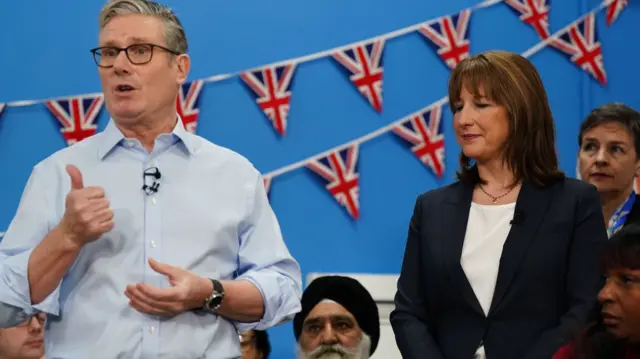
    Chancellor of the Exchequer Rachel Reeves stands next to Prime Minister Sir Keir Starmer as he speaks during a visit to the Benn Partnership Centre, a community centre in Rugby,Image source, PA

    When we hear from the PM later, he will say the UK is "beating" the economic forecasts, but will stress that ministers must still go "further and faster" on pro-growth measures.

    Lowering the cost of living is key, he will argue, adding that this will be achieved in part by slashing regulation.

    "Rooting out excessive costs in every corner of the economy is an essential step to lower the cost of living for good, as well as promoting more dynamic markets for business," he will say.

    The PM is also expected to endorse the decisions taken by Reeves in the Budget, including on energy bills, rail fares and protecting investment and public services.

  9. Minister defends Reeves ahead of Starmer speechpublished at 09:53 GMT 1 December

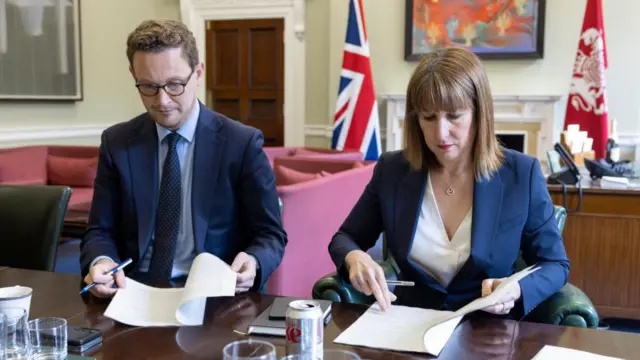
    Darren Jones and Rachel ReevesImage source, HM Treasury
    Image caption,

    Darren Jones, who defended the chancellor earlier, previously worked under Reeves as chief secretary to the Treasury

    Rachel Reeves has come under pressure following accusations she misled the public in the run-up to the Budget, painting a gloomier-than-reality picture of the public finances - something she has firmly denied.

    We've been hearing from allies and critics on broadcast outlets this morning - here's a recap:

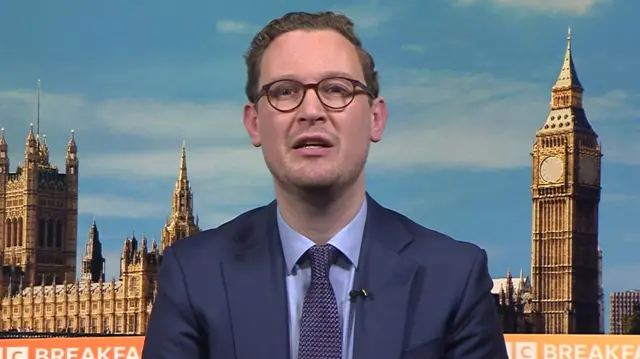
    • The PM's Chief Secretary Darren Jones said "of course" Reeves didn't lie
    • He says the government needed to increase its financial buffer, or "headroom" - arguing this was one reason taxes had to go up - in order to pay for cost-of-living policies and investment in the NHS
    • This echoes comments made by Reeves over the weekend: "I clearly could not deliver a budget with just £4.2bn of headroom," she told the BBC's Laura Kuenssberg
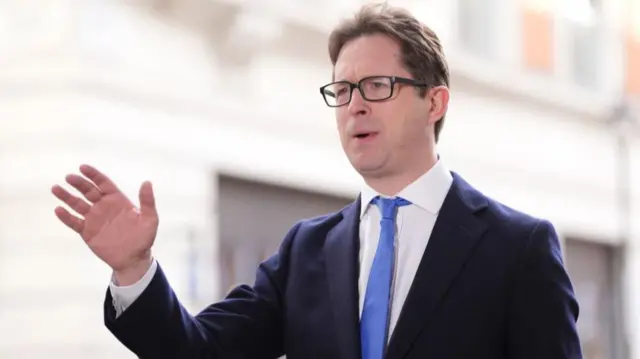
    • But shadow minister Alex Burghart has accused Reeves of trying to "manipulate" the financial markets, and says shadow chancellor Mel Stride has written to the Financial Conduct Authority - we've got more on what's behind that accusation here
    • It comes after opposition leader Kemi Badenoch called for the chancellor to resign over the weekend. She says Reeves presented the public finances as worse than they were to lay the ground for welfare spending

    All this comes ahead of a speech by PM Keir Starmer, at around 10:30 this morning. He will focus on welfare reform, warning that the welfare state is "trapping people, not just in poverty, but out of work". He's also expected to back Reeves and her Budget choices.

    We'll bring you the key lines.

  10. Investment chief backs Reeves over Budget bufferpublished at 09:18 GMT 1 December

    Archie Mitchell
    Business reporter

    Shanti Kelemen, co-chief investment officer at 7 Investment Management, has backed the chancellor's decision to build up a substantial financial buffer in the Budget.

    As we've been reporting, Rachel Reeves has been facing questions after official forecaster the Office for Budget Responsibility revealed she had billions of pounds of headroom against her self-imposed fiscal rules, even without last week's tax hikes.

    She has argued it would have been irresponsible to deliver a Budget leaving just £4.2bn of headroom.

    And, asked about the row over whether Reeves had misled the public over the state of the country’s finances, Kelemen told Radio 4's Today programme: "I don't think it matters from an investment perspective. She couldn't have had a Budget with £4bn or £5bn of headroom. It would have been too low.

    "It's probably a political question, all the stuff around, what she knew when, but you probably couldn't have just come out with that amount and not had a reaction from the gilt market."

  11. Analysis

    Growing welfare bill adds to public finance pressurepublished at 09:02 GMT 1 December

    Michael Race
    Business and economics reporter

    • Later this morning, Prime Minister Keir Starmer will give a speech on welfare reform - read extracts here, and watch live on this page from around 10:30 GMT

    The growing welfare budget played a big part in choices made by Rachel Reeves in the Budget last week, and follows the government opting to U-turn earlier this year on some reforms.

    Delving into the OBR's economic forecast, the UK's official forecaster says welfare spending is expected to rise this year by some £18bn to a total bill of £333bn.

    The OBR estimates the bill will rise by an average of £11bn a year, to reach £406bn in 2030-31 and swell to 11.2% of the total size of the UK economy.

    The increase is "mainly driven by rising spending on health and disability benefits and pensioner spending", which includes the government's triple lock, it says.

    The triple lock policy guarantees that the state pension goes up each year in line with either inflation, wage increases or 2.5% - whichever is highest.

    The OBR bases the increase in spending on health and disability benefits on the "assumption that the sharp increase in caseloads seen over recent years will continue, but with the rate of growth slowing from this year onwards".

  12. Jones insists Reeves had to increase financial buffer in Budgetpublished at 08:43 GMT 1 December

    Nick Robinson pushes Jones on the narrative created around the Budget - that the government blamed poor economic performance for increasing taxes, rather than their own policy decisions to spend more.

    Jones denies this, saying that the OBR's prediction of £4 billion "headroom" (that's government-speak for a buffer in spending plans) would have been "the lowest headroom that the government has ever had in a budget process".

    That's an echo of what Reeves told the BBC yesterday, when she said: "I clearly could not deliver a budget with just £4.2bn."

    Reeves added: "I was clear that I wanted to build up that resilience and that is why I took those decisions to get that headroom up to £21.7bn."

  13. Did Reeves only tell the public half the story before the Budget?published at 08:33 GMT 1 December

    We’re now hearing from Darren Jones on the Today programme, after he appeared on Breakfast earlier.

    Nick Robinson plays Jones a clip from former Sainsbury's boss Justin King, in which he says the chancellor's "misleading" messaging before the Budget has had "real-world consequences".

    Robinson puts to Jones that Reeves only told the public "half the story" - in effect, leaving out the good news about economic forecasts, and focusing on the bad bits.

    "That's not correct Nick," replies Jones, saying the OBR did downgrade its assumptions overall.

    "This is a budget that met the needs of the public, it tackled cost of living in the short term, protected investment in the NHS and got debt falling as a share of the economy."

  14. Analysis

    To state the obvious, this is not ideal for a chancellor following a Budgetpublished at 08:24 GMT 1 December

    Henry Zeffman
    Chief political correspondent

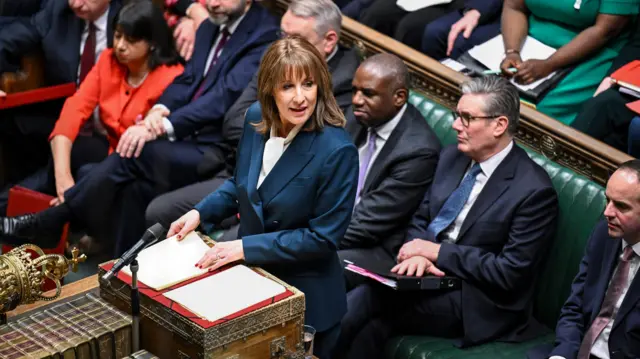
    Rachel Reeves in the Commons delivering the Budget at the dispatch boxImage source, House of Commons

    Sir Keir Starmer wants to talk about growth and welfare reform today – in itself, a slightly unusual decision given neither was a theme of Wednesday’s Budget.

    But what Westminster is now watching most closely is for how he defends Rachel Reeves, who spent the weekend grappling with accusations of dishonesty.

    To state the obvious, that is not ideal for a chancellor in the days following a Budget.

    Labour MPs have been broadly positive since the Budget about the choices Reeves made. For some I spoke to at the weekend that remains the case.

    But it will be interesting to see the extent to which some now revise, or indeed do not revise, that assessment if they feel that the premise on which pre-Budget speculation took place was wrong.

    Yet for a government which is already struggling for popularity, what Labour MPs think is not the most important thing.

    Many people are being "asked", in Reeves’s terminology, to pay more tax. The basis on which they are being asked to do so really matters.

  15. Shadow minister accuses Reeves of trying to 'manipulate the gilt market'published at 08:15 GMT 1 December

    Alex BurghartImage source, PA Media
    Image caption,

    Alex Burghart

    We're now hearing from the Conservatives' Alex Burghart, shadow chancellor of the Duchy of Lancaster (that's partly a finance role).

    Speaking on BBC Radio 4's Today programme, he accuses the chancellor of trying to "manipulate the gilt market" - where the government borrows money - calling it a "very serious offence".

    Reeves' pre-Budget speech on 4 November was widely interpreted as meaning income tax rates would go up (a policy that didn't ultimately materialise). That messaging could - in theory - have reassured markets about the UK's financial stability, and made borrowing cheaper.

    Burghart says if you use false information to "manipulate a market", then you have "broken the law", adding that executives in a private company would be "sacked".

    He says there should be an investigation, and adds that shadow chancellor Mel Stride has written to the Financial Conduct Authority.

    The BBC's Nick Robinson challenges Burghart, saying the chancellor didn't actually say she was going to put up income tax.

    Burghart says Reeves's team were "going around briefing", making off-the-record comments. He claims it went "way beyond" the usual briefing in the lead-up to a Budget event.

  16. Jones quizzed on ministerial briefings to mediapublished at 07:57 GMT 1 December

    Darren Jones is asked how damaging it is to see newspaper quotes from his own party's ministers describing the handling of the Budget as a "disaster" and calling Reeves and Starmer "weak and incompetent".

    Jones says "it's not for me to tell my colleagues that briefing against yourself is a bad idea", but he rejects the premise of the question.

    Asked whether it has damaged trust in the government, Jones says briefings to the press damage trust - but he insists "the Budget has brought stability back to public finances and the economy".

  17. Did Reeves lie? 'Of course she didn't'published at 07:48 GMT 1 December

    Darren Jones, the chief secretary to the prime minister, is asked whether the chancellor lied in the lead-up to the Budget.

    "No, of course she didn't," he replies.

    Pushed on the question again, Jones holds firm. He says Reeves had three clear priorities going into the Budget: to tackle the cost of living, protect investment in the NHS, and get debt falling as a share of the economy.

    She "ticked all of those boxes", he says.

    When asked again how honest Reeves was in the lead-up to the Budget - and whether she misled the public by suggesting the public finances were in a worse state than they were - Jones explains how the Office for Budget Responsibility's forecasting process works.

    There are five rounds of forecasts, he says. Numbers are updated on a "continuous basis" with decisions taken by the chancellor in the final week or so before the Budget.

    The £4bn "headroom" revealed in one of these forecasting rounds was "too small", he adds.

    Jones says the government needed to increase its headroom to £20bn and pay for the decisions it took on cost-of-living measures and the NHS.

  18. Darren Jones speaking to BBC now - watch livepublished at 07:38 GMT 1 December

    The Chief Secretary to the Prime Minister, Darren Jones, is speaking to BBC Breakfast now. Watch live at the top of the page and stay here for key lines.

    Jones
  19. Badenoch says Reeves should resign over Budget build-uppublished at 07:23 GMT 1 December

    Media caption,

    Badenoch says the Conservatives have reported Reeves to the Financial Conduct Authority

    Kemi Badenoch has reiterated her calls for Rachel Reeves to resign for her pre-Budget messaging.

    The Conservative leader told the BBC's Laura Kuenssberg on Sunday: "The chancellor called an emergency press conference [on 4 November] telling everyone about how terrible the state of the finances were and now we have seen that the OBR had told her the complete opposite.

    "She was raising taxes to pay for welfare.

    "The only thing that was unfunded was the welfare payments which she has made and she's doing it on the backs of a lot of people out there who are working very hard and getting poorer.

    "And because of that, I believe she should resign."

    Badenoch's comments comes after she labelled Reeves "spineless, shameless and completely aimless" during the Budget debate.

    The Conservative leader accused Reeves of breaking promises not to raise taxes - and accused her of "whining about mansplaining" and misogyny.

    Meanwhile, Reform UK leader Nigel Farage has reported Reeves to the independent adviser on ministerial ethics to investigate whether she broke the ministerial code over her pre-Budget interventions.

  20. Reeves denies misleading the public with pre-Budget messagingpublished at 07:08 GMT 1 December

    Media caption,

    Laura Kuenssberg presses Rachel Reeves on whether the public was misled before Budget

    Reeves is facing accusations that she misled the public in the lead-up to the Budget, by suggesting the public finances were in a worse state than they actually were.

    In a pre-Budget speech on 4 November, Reeves strongly hinted at tax rises, saying she would make the "necessary choices".

    It was "clear" that the UK's productivity performance was "weaker than previously thought", Reeves said.

    But a letter from the OBR, external, sent to MPs on Friday, has - her critics say - challenged this narrative.

    It reveals that a forecast of higher wages would help offset the effects of the productivity downgrade - something Reeves did not mention.

    It also appears she was on track to meet her fiscal rules by 2029/30.

    On 31 October, the OBR told the Treasury it was on course to meet its rule of not borrowing to fund day-to-day spending - albeit by £4.2bn less than the £9.9bn in "headroom" (or "buffer") Reeves left herself last year.

    Reeves delivered her pre-Budget speech just four days later.

    Tory leader Kemi Badenoch said the letter showed Reeves had "lied to the public" and should resign.

    Reeves has denied misleading the public. "I clearly could not deliver a budget with just £4.2bn of headroom," she told the BBC's Laura Kuenssberg on Sunday, saying that would have been "the lowest surplus any chancellor ever delivered".