'We need to teach children about personal finance'

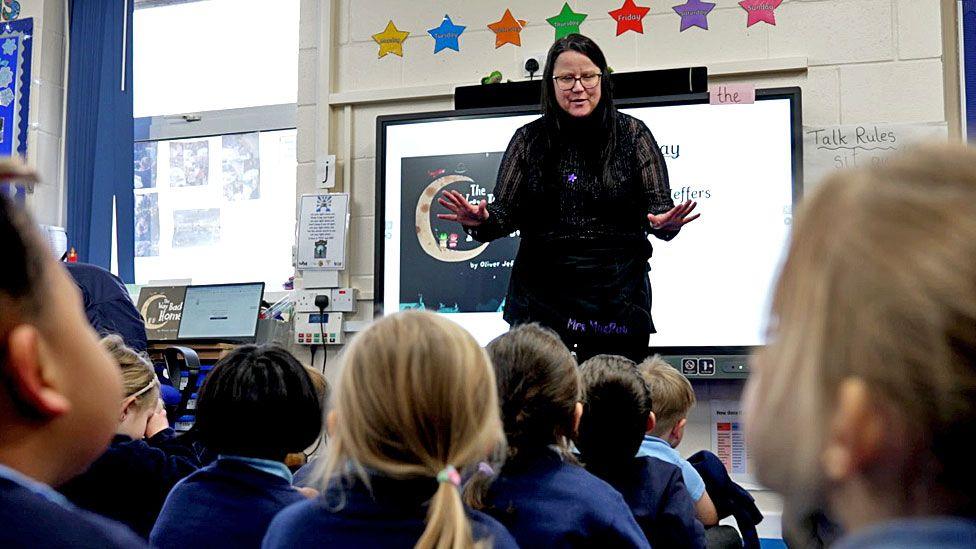
Children at Queen's Park Academy School in Bournemouth already learn about personal finance
- Published
All primary and secondary school pupils in the south are set to be taught about financial matters under changes to the national curriculum.
Children will have lessons in budgets, money management, mortgages and compound interest.
The new curriculum is expected to be ready in 2028.
Some teachers have warned that the changes will require training and support for staff before being implemented.
But one headteacher told BBC Politics South "if we don't teach them those things, we're doing them an absolute disservice".

Sarah Simmons, Principal at Queen's Park Academy School, says pupils are "switched on" about money
At Queen's Park Academy Primary School in Bournemouth, Dorset, children are already being taught about finances.
Principal Sarah Simmons said that the pupils are quite switched on when it comes to managing money: "They are very savvy, sometimes a lot more savvy than we are with their money.
"They learn about debt, they understand what happens, that money doesn't grow on trees, and that actually you have to earn money to get money and those skills they'll take through right until they're adults."

Sarah Porretta is CEO of national schools charity, Young Enterprise
The national charity Young Enterprise has been calling for financial education in schools for years.
CEO Sarah Porretta said: "We see financial education as not just a subject but a life skill. It's very difficult to navigate the world as an adult if you don't have that financial literacy.
"Teachers need support to do this, but we need a national response to this to make sure that teachers feel confident and skilled to teach this really important subject."

Tim Clark, Head of Leaf Studio School says they have a duty to teach pupils about credit and debt
The Leaf Studio Academy in Bournemouth specialises in sport and the performing arts and is also already teaching financial literacy.
Head of School Tim Clark said it's an essential part of what young people need to survive in the modern world: "They do subjects like what is credit, good credit, bad credit, scams, particularly online scams because obviously that's something that's prevalent a lot at the moment and they don't always understand that.
"They do sessions on mortgages and tax and that is always very enlightening as they realise how much they lose in the long run.
"If we don't teach them those things, we're doing them an absolute disservice because they are not going to be equipped to survive and to thrive when they leave school, no matter how good their grades are," he said.
Get in touch
Do you have a story BBC Dorset should cover?
You can follow BBC Dorset on Facebook, external, X (Twitter), external, or Instagram, external.
- Published5 November
- Published8 July 2022
- Published29 January