Summary

  1. Badenoch: People made real decisions based on Reeves's false briefingspublished at 13:02 GMT
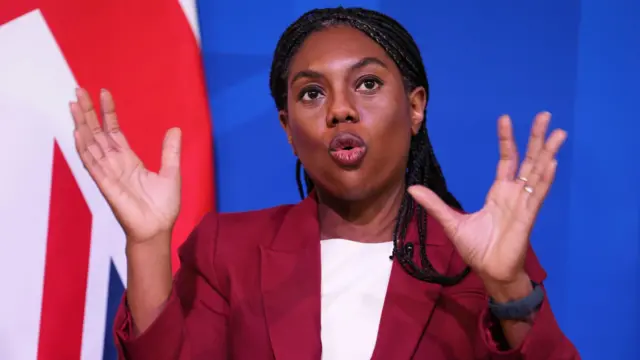
    Kemi BadenochImage source, PA Media

    Kemi Badenoch, the Tory leader, has spoken out again over accusations the chancellor misled the public over the state of the nation's finances in the lead up to the Budget.

    In an interview with the BBC, she says that "a lot of people made real decisions based on the false briefings which Rachel Reeves put out".

    Badenoch explains that the chancellor's pre-Budget warnings that "hard choices" would need to be made led to people fixing mortgages, drawing pensions down and even leaving the country because of fears around taxes.

    "Only for us to find out that that was not the case, she did not need to raise those taxes," she continues.

  2. No doubt Reeves misled country, says Faragepublished at 12:54 GMT

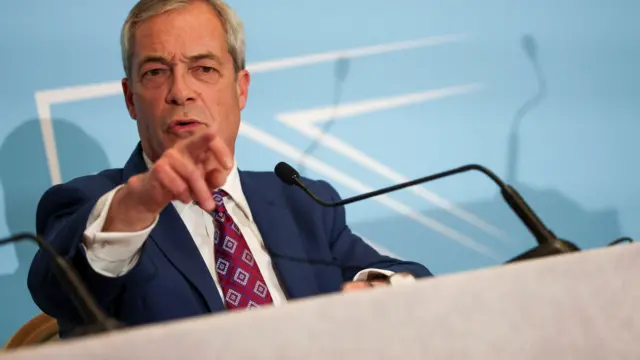
    Nigel Farage speaks during a post-budget press conference in London, Britain, November 2Image source, Reuters

    Reform UK leader Nigel Farage has described the aftermath of the Budget as a "complete and utter shambles".

    "There is no doubt now that Rachel Reeves did deliberately mislead the country, and by the looks of it, her own cabinet as well," he says.

    All of it, Farage says, was as an excuse to raise taxes.

  3. Fixing trade relations with EU best way to boost growth - Daveypublished at 12:43 GMT

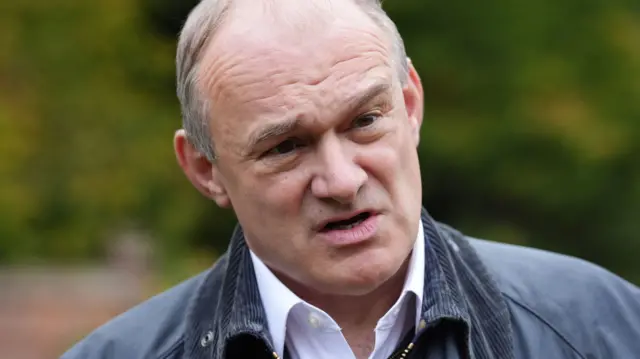
    Close up of Ed Davey speaking to the press, he is wearing a grey jacket and white shirt and looking off cameraImage source, PA Media

    Starmer is refusing to do the one thing that would boost growth the most, says Liberal Democrat leader Ed Davey.

    Responding to the prime minister's speech this morning, Davey says "fixing our trade with the EU through a new customs union" is the "single biggest thing" that can achieve the growth Starmer has said he wants.

    "The prime minister’s own economic adviser has reportedly told him that a customs union would be one of the most effective ways to boost growth – but it seems he ignored her," he says.

    Davey adds that that the UK has a "£90bn Brexit black hole in the public finances" and that its time for the government to "take the Brexit blinkers off".

  4. Analysis

    Budget speculation does affect your financial choicespublished at 12:33 GMT

    Kevin Peachey
    Cost of living correspondent

    While the debate rages about knowing and sharing (or not sharing) economic data before the Budget, this much is clear: Budget speculation does affect people’s personal, financial choices.

    Take savers as an example. There were plenty of rumours – which proved to be true – that the chancellor wanted to lower the annual tax-free allowance in a cash Isa.

    Bank of England figures published today show savers paid £4.2bn into cash Isas in September, ensuring money was saved before any changes to Isas were made. (In fact, the reduced allowance won’t be until April 2027 and will only affect the under 65s.)

    The impact on the housing market, however, is more difficult to judge because there are more variables in play.

    Mortgage approvals were relatively steady through September and October, the Bank’s data shows. Comparisons with a year ago are tricky, not least because the Budget was nearly a month earlier in 2024.

    With interest rates falling, some in the housing sector say activity should have picked up, but it was curtailed by Budget speculation this time around.

    Some analysts expect the buying and selling of property to pick up in the new year, now the uncertainty is over.

  5. Scotland's first minister calls for Reeves to gopublished at 12:11 GMT

    David Wallace Lockhart
    Scotland political correspondent

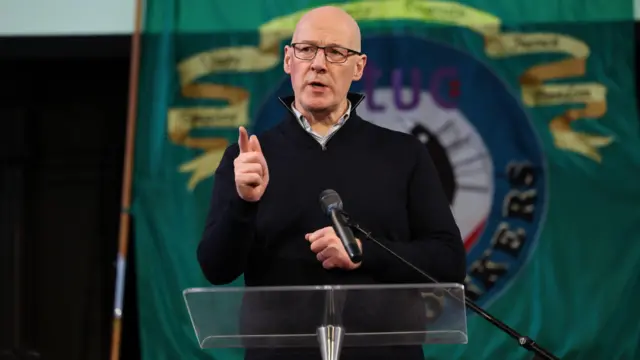
    John SwinneyImage source, PA Media

    Scotland's First Minister John Swinney has added his name to those who think that Rachel Reeves should resign.

    He's of the view that the chancellor misled the public and the financial markets, and he now believes her position is untenable.

    Relations between Scottish and UK ministers have been strained in recent weeks.

    SNP politicians in Edinburgh had been demanding more clarity about income tax rises that were touted in advance of the UK Budget (tax rises that never materialised).

    The recent accusations that Rachel Reeves overplayed the perilous state of the UK's finances seem to be the final straw for Swinney, who's now indicating the chancellor has no option but to step down.

  6. Analysis

    Why, in my judgement, Reeves was misleading on one specific pointpublished at 11:57 GMT

    Chris Mason
    Political editor

    Chancellor Rachel Reeves has been accused of lying and misleading you before her Budget last week.

    It is my job, after a careful examination of the facts, to call it, on your behalf, in careful, precise language.

    And in my judgement, on one specific element of what the chancellor and the Treasury told us before the Budget, we were misled.

    Let's walk through this, step by step.

    On Tuesday 4 November, the chancellor called an extraordinary pre-Budget news conference.

    Reeves called that news conference because she wanted to prepare the ground for a big Budget full of difficult choices.

    And let's be clear: much of what we heard from the chancellor in her breakfast speech that morning almost four weeks ago reasonably laid the ground for what was to come.

    Crucially, she also talked about productivity, a measure of the output of the economy per hour worked.

    The forecaster and watchdog, the Office for Budget Responsibility, was expected to revise down its estimate for productivity growth.

    This decision by the OBR had big implications for Reeves – impacting the numbers, spreadsheets and therefore the calculations and trade-offs she would have to make. In isolation, that made things harder for her, without question.

    In other words, nothing she said in that news conference was wrong.

    But – and this is the key point – we now know she knew something then she didn't share with us that morning.

    And that is that tax receipts were much better than expected and more than offset the reduction in productivity growth.

  7. Reeves responds to claims she misled ministerspublished at 11:51 GMT

    Media caption,

    Reeves says she was 'very clear' about headroom in pre-Budget speech

    Rachel Reeves has responded to claims she misled cabinet ministers about the Budget.

    It comes after an unnamed Labour minister was quoted in the Times describing the handling of the Budget as "a disaster from start to finish".

    Asked by the BBC why ministers were not told about the OBR's better than expected forecast ahead of the Budget, Reeves says: "You would never expect the prime minister and chancellor to go through all the detailed numbers.

    "The cabinet are briefed on the morning of the Budget on the Budget numbers."

    Reeves says while ministers are briefed on things that affect individual departments, the full details contained in the Budget are not supposed to be provided in advance.

    Return to the latest post
  8. Analysis

    Chronology is crucial - the OBR didn't change forecasts between 31 October and Budgetpublished at 11:43 GMT

    Henry Zeffman
    Chief political correspondent

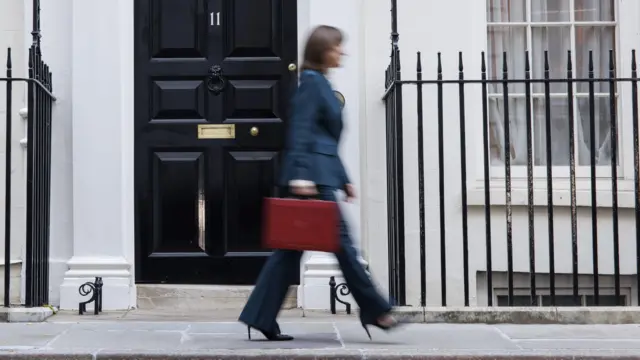
    Blurred Rachel Reeves leaves number 11 with red boxImage source, EPA

    It was significant that Keir Starmer acknowledged overtly for the first time in the Q&A session we just heard that the government had strongly considered putting up the rates of income tax.

    Doing so would not only have been a clear manifesto breach – as Starmer acknowledged this morning – but also would have made him the first prime minister to increase the basic rate in half a century.

    Ultimately, he and Rachel Reeves decided not to. Starmer said that this was because "the numbers improved".

    It is true that the numbers improved over the repeated rounds of the forecast through October.

    However, there is an important point to make on the chronology. The OBR made no change to its forecasts between 31 October and the Budget on 26 November.

    Reeves gave her speech strongly hinting at an income tax rise on 4 November, and did the same in an interview with BBC Radio 5 Live on 10 November.

  9. Recap: Starmer defends Budget after rowpublished at 11:40 GMT

    We've just heard from PM Keir Starmer, who's been outlining plans to reform welfare and boost productivity - and also defending the Budget after a row about the chancellor's comments before it was delivered

    Here's a flavour of what we've heard:

    We'll be analysing some of Starmer's claims later in this page - stay with us.

  10. What's your reaction to the PM's speech?published at 11:23 GMT

    You can get in touch in the following ways:  

    Please read ourterms & conditions andprivacy policy

    In some cases a selection of your comments and questions will be published, displaying your name and location as you provide it unless you state otherwise. Your contact details will never be published.

    Your Voice in white over red background
  11. 'We're asking everyone to contribute a little more'published at 11:20 GMT

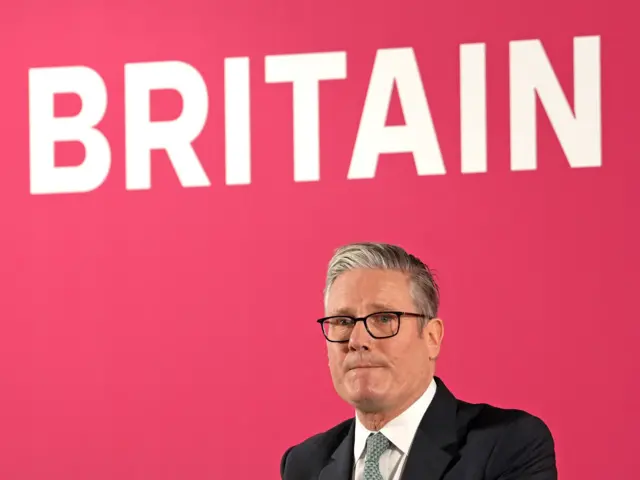
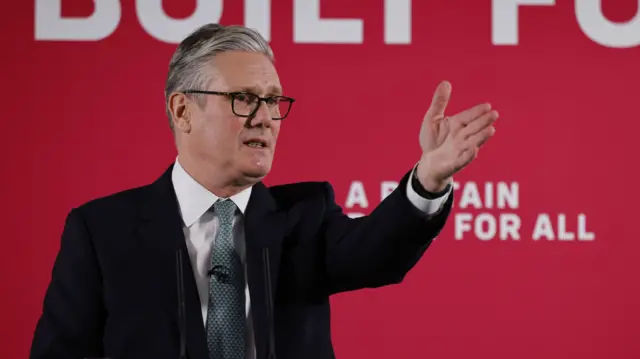
    Sir Keir Starmer standing in front of a red background that reads "Britain"Image source, PA

    The Sun asks Starmer whether welfare spending is coming down and about measures for people who aren't contributing to the country's economy at all.

    He says his government's plans are "asking everybody to contribute a little more" - but doesn't say how he will approach people who aren't contributing.

    It's key that the government supports the "working poor" - families who work but don't make enough money to meet their bills - and children in poverty.

    He says that's the right thing to do for children and the NHS. For the economy to grow, Starmer says that "every single person" needs to contribute to that.

    The PM's speech and Q&A have now finished, stick with us as we bring you reaction and analysis.

  12. PM argues he wanted to protect NHS spendingpublished at 11:18 GMT

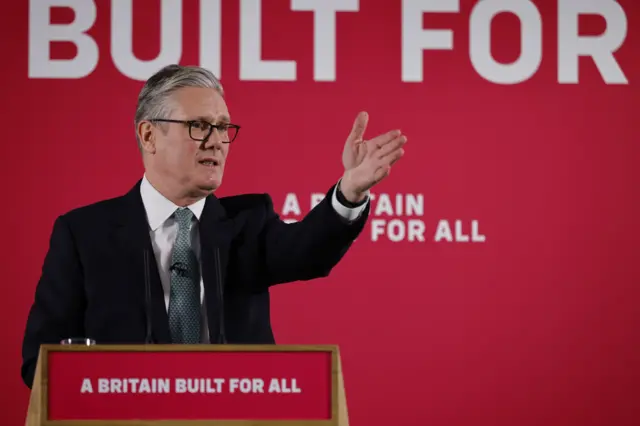
    Sir Keir Starmer raises his right arm as he stands behind a red podium that reads: "A Britain for all"Image source, EPA/Shutterstock

    It's put to Starmer by the Times that Reeves did, in fact, mislead the public as she knew about the forecast £4bn budget surplus before her pre-Budget news conference in which she did not rule out an income tax rise.

    Starmer reiterates that in the early stage of Budget planning it was important not to rule out any measures until the final decisions were made.

    "To be told at the beginning of the process you're £16bn worse off than you might have otherwise been is a significantly difficult starting point."

    The prime minister says he could have come out and said he had decided to not protect the NHS and cut its funding: "I wasn't going to do that."

  13. Starmer highlights focus of Budget spendingpublished at 11:12 GMT

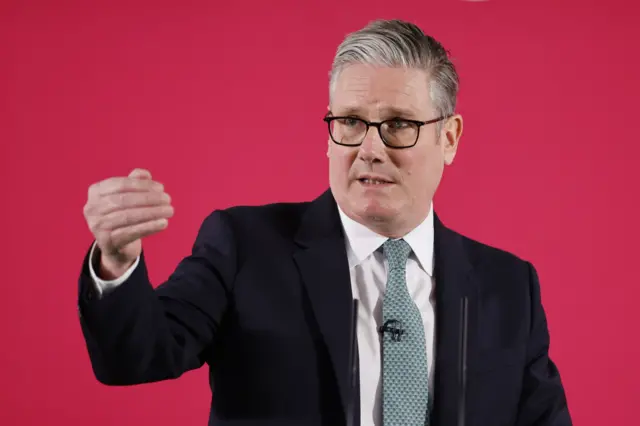
    The prime minister standing in front of a red background and holding his left hand in the airImage source, EPA/Shutterstock

    ITV's Robert Peston asks Starmer whether it's the chancellor's fault or his that preparations for the Budget were "shambolic".

    Starmer defends the Budget, outlining the money to protect public services and the NHS. He highlights tackling waiting times, doubling the economic buffer - "fiscal headroom" - and lowering the cost of living as key things that the Budget was focused on.

    This will help businesses by promoting "stability" and reducing "uncertainty", he says.

    When asked about the EU, he says work is being done to rebuild relations after Brexit damaged the UK's economy - particularly to drive down supermarket costs.

  14. Starmer argues that there was no 'easy starting point' for Budgetpublished at 11:06 GMT

    Next is a question from Beth Rigby at Sky News. She also asks whether the chancellor misled the public in her pre-Budget speech on 4 November, referring to the OBR letter published on Friday.

    "There was no misleading," Starmer says. He doesn't accept that the OBR productivity review showed the government had an "easy starting point", arguing that the review showed productivity had been revised down, leaving the government with £16bn less in revenue by 2029-30.

    He then turns to the government's objectives in this Budget. He says he wanted to "more than double" the government's fiscal "headroom" - or buffer - while also helping with the cost of living.

    Finally, Starmer turns to welfare reform, describing it as his "moral mission". He says he "can't leave the best part of a million young people not learning or earning".

  15. On Budget row, Starmer says there was 'no misleading there'published at 10:59 GMT

    Taking question from the press, Starmer is asked by the BBC's Chris Mason if Reeves misled the public by refusing to be "candid about what she knew" in her statements ahead of the Budget.

    The prime minister says ahead of the budget an OBR review showed that there would be £16bn less than previously estimated.

    He says the government had made commitments to protect the NHS and public services, cut borrowing costs and improve the cost of living.

    "Therefore, against that backdrop, it was inevitable that we would have to raise revenue. So there was no misleading there."

    The prime minister adds that there was a point where he and the chancellor thought they would have to go ahead with a manifesto breach "of some significance", but that it was not necessary in the end.

  16. Starmer argues for closer trade ties with the EUpublished at 10:57 GMT

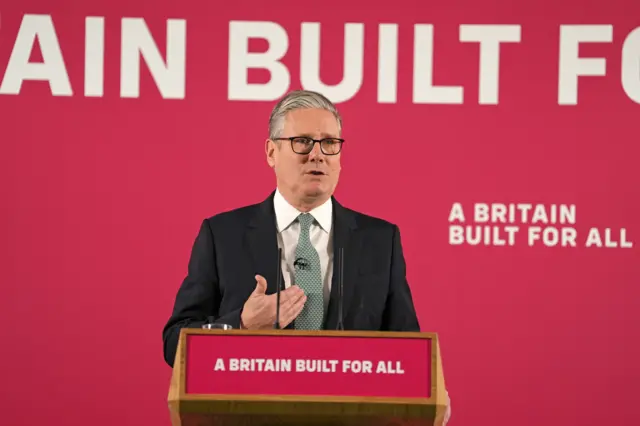
    Prime Minister Sir Keir Starmer standing in front of a red background at a podium that reads "a Britain built for all"Image source, EPA/Shutterstock

    Starmer next moves to address trade.

    He says Britain must be positioned as an open trading economy.

    "We must all now confront the reality, that the Brexit deal we have significantly hurt our economy," he continues.

    So, Starmer says the country needs to be "grown-up" about the fact that we must be closer to the EU in order to reduce trade friction - as, he says, the country has done with the US and India.

    The PM then rounds off his speech to applause. We'll listen in to his responses as he takes questions from journalists in the room.

  17. Welfare system has trapped people in poverty, says Starmerpublished at 10:54 GMT

    Starmer starts to outline his plans for a "productivity revolution" in the UK to fix an economy "scarred by austerity, by Brexit".

    First, he says there will be changes in the nuclear industry to remove "unnecessary red tape" and "fundamentally misguided environmental regulations" that make the UK the most expensive country to build nuclear power plants.

    "For years Britain did not have a proper industrial strategy," he says, adding that this is key to rooting out "excessive costs in every corner" of the economy.

    The second step is to reform the welfare state, Starmer continues. The welfare system has "trapped people in poverty," he says, and kept young people who are out of work in "a poverty of ambition".

    He says more will be invested in apprenticeships and in making sure young people have guaranteed job offers or training.

  18. 'We can beat the forecasts on growth'published at 10:49 GMT

    Starmer now turns to economic growth.

    "We're confident we can beat the forecasts," he says, claiming the government has "already beaten them this year".

    He says that the government is removing barriers to business across the economy, and introducing measures to help entrepreneurs launch their businesses.

    But the "most important things" the government can do for growth and business is to "drive inflation down" so that borrowing costs fall too, and to "retain market confidence".

    "This is what the country needs most now – it is what the Budget secured," Starmer says.

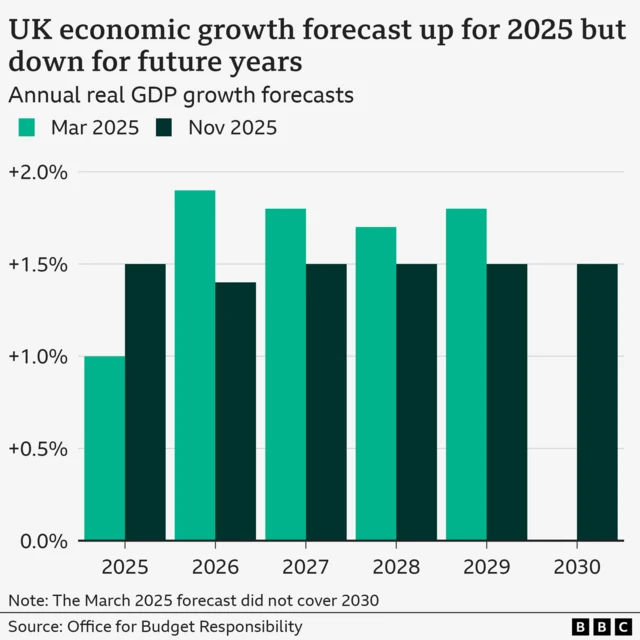
    For context: The OBR’s latest forecast shows GDP will grow by 1.5% in 2025, up from the 1% expected at the previous forecast in March. But from then on, the outlook has been downgraded - see below.

    A bar chart showing UK economic growth forecasts from March 2025 and November 2025. According to the latest OBR forecast, GDP is set to rise by 1.5% in 2025, 1.4% in 2026, 1.5% in 2027, 1.5% in 2028, 1.5% in 2029, and 1.5% in 2030. In March the growth forecasts were 1% in 2025, 1.9% in 2026, 1.8% in 2027, 1.7% in 2028, and 1.8% in 2029. The March forecast did not cover 2030.
  19. Starmer says he wants every child equal at the starting line of educationpublished at 10:46 GMT

    The prime minister says he's sick of hearing stories of some children turning up at reception "reading books and ready to learn" while others are "still in nappies".

    He says that inequality at the age of four can be "baked in for life" and is likely to last a whole life.

    "That's why everything we're doing for children is a game-changer for our potential," he says.

    He adds that his government is giving every child the best start in life: "Every child equal at the starting line of their education."

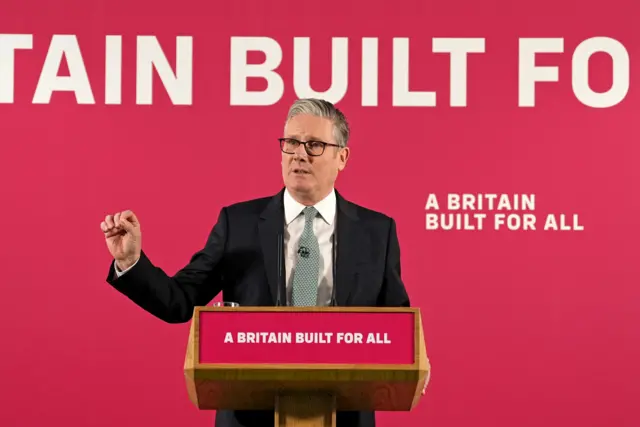
    The prime minister standing in front of a red background that reads: A Britain built for allImage source, PA Media
  20. Starmer says Britain is 'back on track'published at 10:43 GMT

    Starmer takes a moment to look back at the progress he says his government has made since Labour came to power.

    The PM says that, in this time, ministers have cut borrowing faster than any other G7 country, cut the cost of living and increased wages and economic growth.

    "That is a record to be proud of," he says, "and I am proud."

    He says Britain is now "back on track", and next year "we will see the benefits of our approach", not just in national statistics but within communities themselves.

    The prime minister standing in front of a red background that reads: A Britain built for allImage source, PA Media